Book a call
Skip to content
  1. Home
  2. Open Source

Read our code before you hire us. We insist.

Broadifi Technologies builds three open-source tools in public: CalmAPI, a backend framework for Node.js and MongoDB; Ognom, a desktop client for MongoDB; and TerCTL, a desktop SSH terminal. All three are MIT licensed. The code is on GitHub and the issue trackers are open.

If you want to know how we write software, this is the most honest answer we can give you.

What we maintain

Each one started as something we needed on our own projects. Open any of them for screenshots, the full feature list and how to install it.

  1. CalmAPI

    framework /
    • 2.0 beta
    • MIT
    • Node.js · MongoDB

    A backend framework that copies itself into your project. You get about 8,600 lines of commented JavaScript on Express 5 and Mongoose, in a calm/ folder you can read, debug and change.

    You describe a resource once, its fields and who may do what, and CalmAPI builds the routes, validation, filtering and OpenAPI document from it. Then calm audit signs in as every role and calls every route, so the access rules are tested, not assumed.
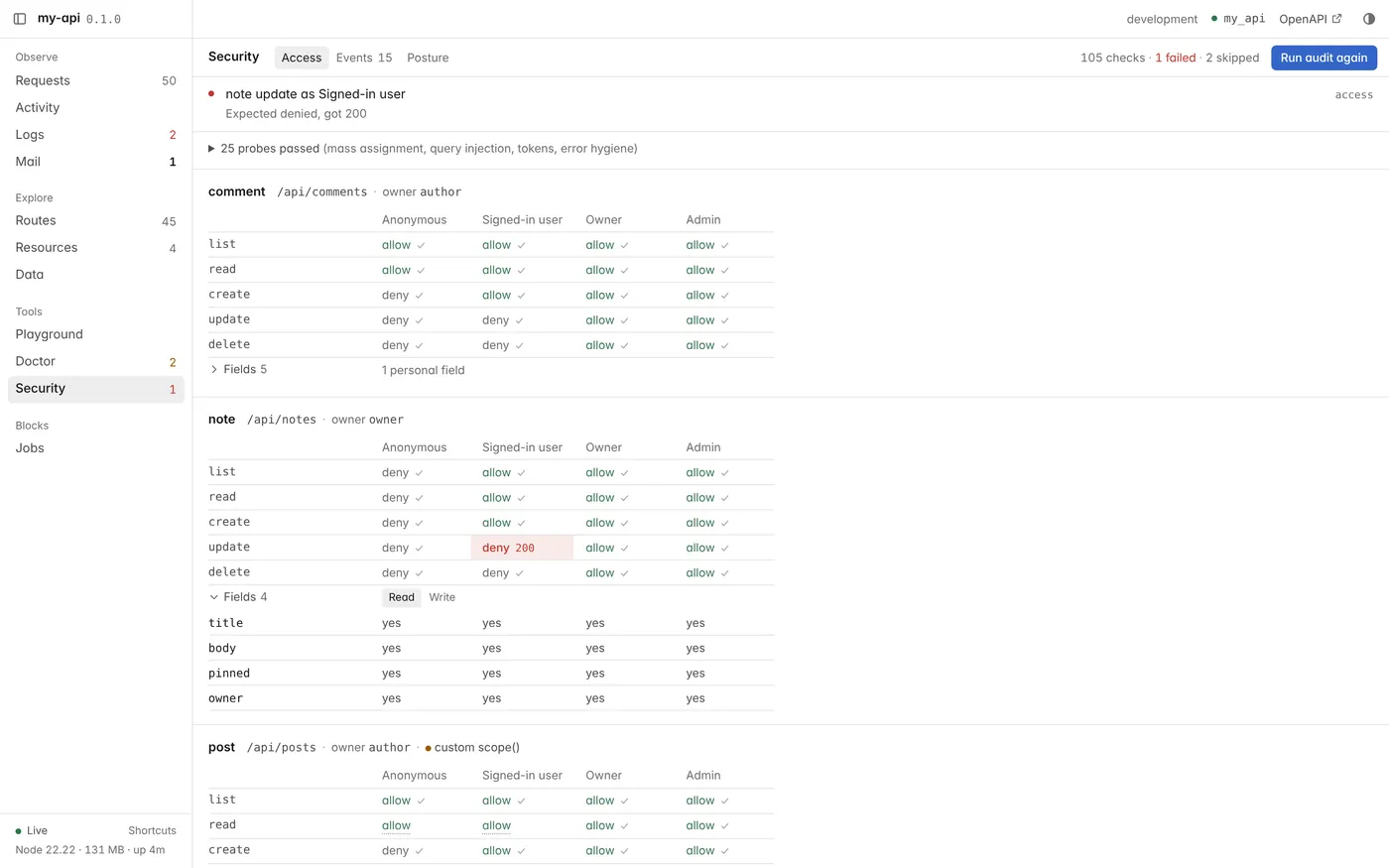
    CalmAPI devtools Security panel after running the audit, with one failed cell highlighted in red
  2. Ognom

    native /
    • MIT
    • Tauri · Rust
    • macOS · Windows · Linux

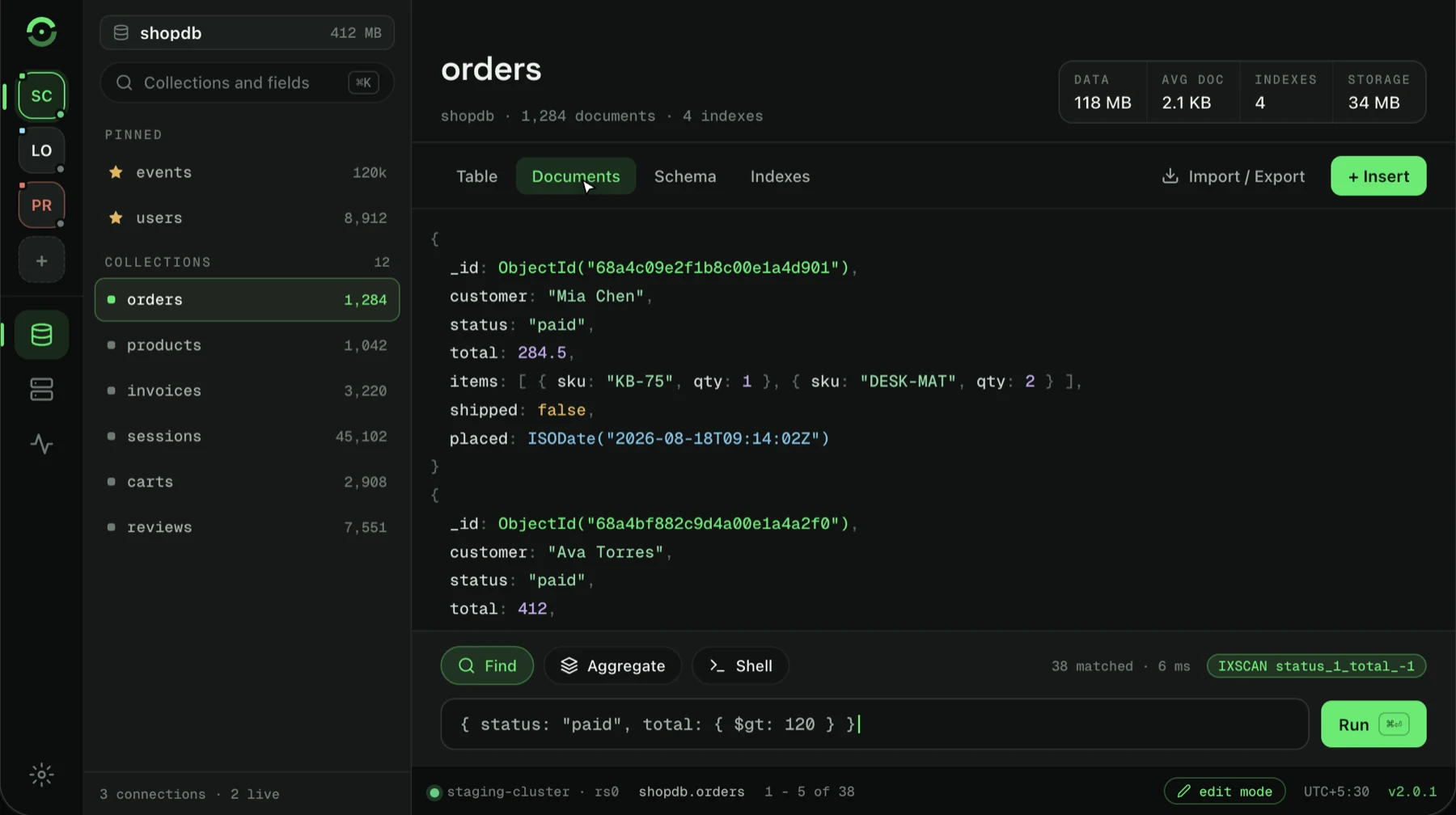
    A MongoDB client for people who spend their day in queries. It is a native app on Tauri and Rust, so it opens quickly and stays light on memory.

    Our favourite part is the unglamorous one: mark a connection as production and Ognom opens it read-only. Writes are blocked in the backend, not just hidden in the interface, until you switch to edit mode and confirm.

    Ognom showing documents from the orders collection of a MongoDB database, with a Find query for paid orders over 120 and the index plan it used
  3. TerCTL

    native /
    • MIT
    • Tauri · Rust
    • macOS · Windows · Linux

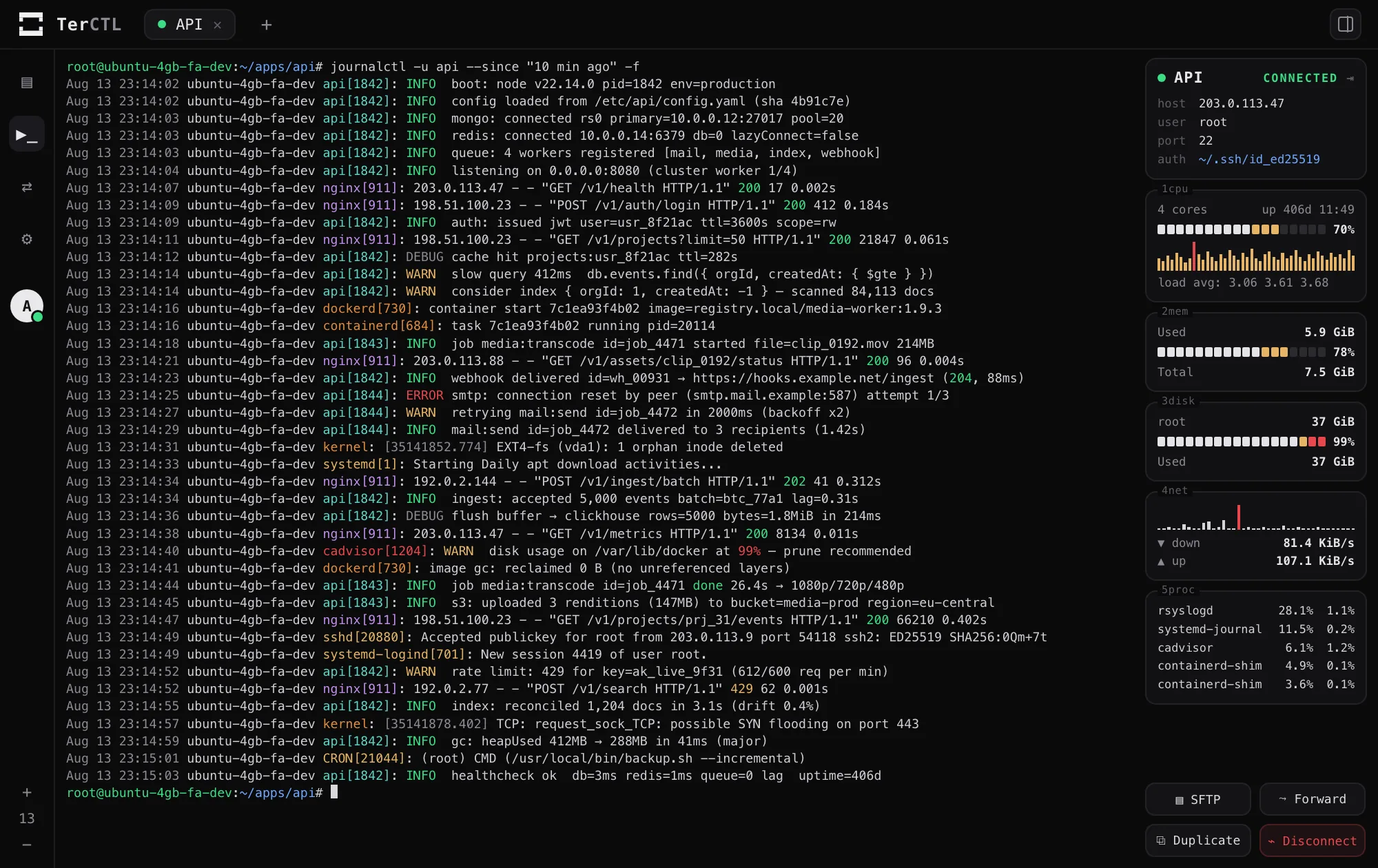
    An SSH client for people who look after more than a couple of servers. Hosts live in groups with tags, terminals split into panes, and a sidebar shows the machine's CPU, memory and disk while you work.

    You can open a server directory and edit files in place, or drag files across in a two-pane SFTP view. Passwords and keys go to your operating system's keychain, never to a config file.

    TerCTL running an SSH session, with live host metrics in the sidebar

Smaller things we have put out: asLIT, an SSH management CLI, and a KrakenD plugin development environment for Go.

Why a dev shop publishes its internals

We started the way most engineering teams start: annoyed at how much of every project went into rebuilding the same foundations. Access rules, validation, a decent way to look at the database, a sane way to reach the servers. So we built our own, and at some point we stopped keeping them to ourselves.

Publishing them keeps us honest. Anyone can write "senior engineers" on a website. A repository with its commit history, its issues and its tests is much harder to fake, and CalmAPI is where most of our Node.js projects start.

Found a bug in one of them? Open an issue on GitHub. It is also a fair way to see how we deal with problems before you hire us.

Questions developers ask us

Can I use these tools in a commercial project?

Yes. CalmAPI, Ognom and TerCTL are all MIT licensed.

Are Ognom and TerCTL really free?

Yes. There is no account, no licence key and no paid tier. Both update themselves from signed GitHub releases.

Do you accept contributions?

Yes. Issues and pull requests are welcome on each repository.

Will you build my project on these tools?

When they fit. CalmAPI is our default for Node.js APIs, and because it copies its source into your repository, you own every line. It is a starting point, not a lock-in.

Have something worth building?

Book a call